
Influencers Must Change Brains, not Minds: why information, persuasion, and motivation don’t cause change
 As an influencer, how often do say to yourself “Why doesn’t she understand me?” or “If he understood me better this decision would be a no-brainer.” It’s natural to assume Others will understand – and comply with – your suggestions. Have you ever wondered what’s happening when they don’t?
As an influencer, part of your job is to facilitate change. But how? In general, you’ve likely used great rationale, logic, leadership, data sharing, or just plain directives.
But what if your Communication Partner’s brain isn’t set up to hear you accurately? What if your words are misinterpreted, or not understood? You naturally assume your words carry the meaning you intend to convey. But do they?
Sometimes people misinterpret you and your audience is restricted to only those who naturally understand your message. Sometimes people ignore you, regardless of how important your message, how engagingly you deliver it, or how badly they need it.
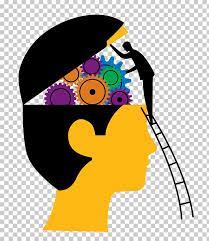
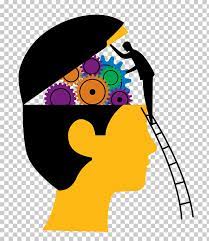
What if ‘changing minds’ is the wrong way to think about it, and if your real job is to ‘change brains’? What if the Other’s brain, it’s neural circuitry, was in charge and your job was to facilitate the way it went about decision making?
OUR BRAINS ARE THE CULPRIT
Thinking about using any form of content-based sharing as a persuasion strategy, or assuming people will just heed your message, let me share a confounding concept: words have no meaning until our brain interprets them. According to John Colapinto in his fascinating book This is the Voice,
Speech is a connected flow of ever-changing, harmonically rich musical pitches determined by the rate at which the phonating chords vibrate, the complex overtone spectrum is filtered by the rapidly changing length and shape of the mouth, and lips, interspersed with bursts of noise…It is our brain that turns this incoming stream of sonic air disturbances into something meaningful. (pg 54)
Seems to parallel how we ‘see’ color. We don’t, exactly. Light vibrations enter our eyes and get translated into color by our rods and cones. Otherwise, the world is gray!
Indeed, both what we see and what we hear are largely out of our control, influencing what we notice (or not), how we decide (or not), what we think and hear and are curious about (We can’t be curious unless we have the circuitry to think with!).
Here’s a greatly simplified explanation of how brains translate incoming words (or sounds, or…) as I learned when researching my book WHAT?: Spoken words are merely meaningless electrochemical vibrations that enter our ears as ‘puffs of air’ that get filtered and distorted, then automatically dispatched as signals to what our brain considers a ‘similar-enough’ circuit (one among 100 trillion) for translation. And where the signals don’t match, a Listener’s brain kindly discards the difference!

People understand us according to the natural deletion processes that occur in the brain when spoken words enter, and from there according to the selected, historic circuits that translate these signals, regardless of how different they are from the intended message.
In other words, people don’t hear us according to what we say but by how their historic circuitry interprets it. To me this is quite annoying and hard to address: not only does that restrict incoming content to what’s already familiar to us, there’s a good chance that what we think was said is only some fraction of what was intended.
Unfortunately, neither the Speaker or Listener understands how far from accurate the translation is. Listeners assume their brains tell them exactly what’s been said; Speakers assume they’ve been heard accurately. Turns out these assumptions are both false; communication potentially ends up biased, restricted, and subjective. Obviously, this makes our job as influencers very unreliable.
INFORMATION IS LAST
After 60 years of studying, and developing models for, systemic brain change and decision making, I’ve realized that offering ideas, directives, suggestions, or information is the very last thing anyone needs when considering doing something different (i.e. buying, changing habits, etc.). And yes, it goes against most conventional thinking. But hang with me.
As a kid, my then-undiagnosed Asperger’s caused me to act differently than people around me. I was in trouble often and never understood why. I began reading voraciously on how to change my behaviors: how to visualize, to motivate myself, be disciplined. But they were all based on trying to fix my seemingly automatic actions, to change my behaviors. And I failed repeatedly to make any of the changes permanent.
I finally acknowledged it’s not possible to change a behavior by trying to change a behavior, my brain was the culprit. I then began developing neural workarounds to:
- create new brain pathways to new behaviors,
- consciously change the circuits causing my behaviors,
- enhance my ability to translate incoming words accurately.
I know, I know. It’s odd, and there was lots of trial-and-error. But eventually I figured it out and dedicated the rest of my life to developing, writing about, and teaching systemic brain change models for conscious behavior change.
Thankfully, my concepts caught on in sales, coaching, leadership, and change management: my facilitation models help people orchestrate their own change based on their own internal norms, values, and criteria: in sales, my Buying Facilitation® model teaches people on route to fixing a problem how to become buyers. In coaching and change management, I provide the skill sets to enable people to discover, and act on, their own unique criteria and avoid resistence.
CHANGE FACILITATION
For those of you whose job is to get Others to do something you want them to do, let’s look at it from the side of the people you seek to change.
In order for change to occur, people must understand the difference between their status quo (their problem) and the new activity you want them to do. Below are some of the specific factors they must address to be ready, willing, and able to change:
Conform to norms: Change is more than doing something different; it demands a reconfiguration of the brain circuitry. By first facilitating people through their discovery – by leading them to the underlying beliefs and values that created the circuits that caused the problem – they can be willing to change. It’s got nothing to do with new content or imposed regulations, regardless how important they are. I created a new form of brain-directive question (i.e. not information gathering) called a Facilitative Question that’s quite effective at leading others to their own, often unconscious, answers.
Cost: It’s not until the ‘cost’ (resource, results, disruption) of a fix is identified and agreed to by all stakeholders (including mental models and beliefs) that it’s possible to know if a problem is worth fixing. No one naturally seeks out change if all seems fine, regardless of the problem or the efficacy of the solution.
Disruption: Because our internal systems seek balance (homeostasis), we avoid disruption. And the time it takes us to find a route through to a change that matches our values and avoids risk is the length of the change cycle. If new behaviors are required that cause someone to be out of balance, they will be resisted.
Personal: When change is sought, people must discover their own route to change that match their values and maintains homeostasis. And outsiders can ever understand someone’s history, values, norms, or neural configurations.
EACH PERSON MUST DESIGN THEIR OWN CHANGE
To facilitate change efficiently, we need a shift in thinking. Instead of trying to have the answers for Others, first focus on the goal of helping Others discover how to handle their own change issues enable them to discover their own incongruences. Then they’ll know exactly where they need to add or subtract something to fix it, and the influencer can supply the information to complete the process.
Here’s a situation where I used a carefully crafted sentence to direct a friend’s thinking to where her choice points lie.
I have a lovely young friend who, to me, had serious energy problems. Some days she had difficulty getting out of bed, even with 5 children. Some days she didn’t have the energy to cook or work. And she’d been having this issue for decades. After knowing her a year I finally said, “If the time ever comes that you wish for additional choices around your store of energy to be more available for your kids, I have a thought.”
By shifting the context to her children, by giving her control over her choices and not trying to change her, by leading her to each of her decision points, her system didn’t feel threatened. She welcomed my thoughts, got help (She discovered she was actually dying from a critical lack of vitamin B12.) and now is awake daily at 5:30 a.m. with endless amounts of energy.
No matter what the problem or solution may be, unless someone understands that change won’t cause major disruption, unless the new fits with their values and criteria, unless all the people involved agree to change, they won’t consider doing anything different. So how can we help Others find their own excellence?
You must begin by trusting Others have their own – sometimes unconscious! – criteria for change. Instead of starting with answers or goals, lead them down their unique path through to discovery. Here are some questions to ask yourself:
- Would you rather speak or be heard?
- What is your job – to serve Others through to their own form of excellence or get your point across to anyone who can listen?
- Do you seek a quick hit or a long-term relationship?
- Would you rather be a servant leader or an information hawker?
You decide. It’s possible to serve Others and be available with information when and as they need. Sellers can first facilitate buying, coaches and facilitate permanent change, and marketers can develop content that leads people through to brain change. I’m here if you have questions. Or go to www.sharon-drew.com to learn about my facilitation and brain change models.
_______________________
If you’re enjoying these Monday Articles, please subscribe to make sure you get them delivered to your inbox on Monday morning. I use no cookies, they’re free, and I never use the database to market. As an original thinker I offer these to share out-of-the-box ideas as part of my life’s work. And I’m always eager to hear your thoughts and start a conversation: sharondrew@sharondrewmorgen.com. Enjoy.
_______________________
 _______________________
Sharon-Drew Morgen is a breakthrough innovator and original thinker, having developed new paradigms in sales (inventor Buying Facilitation®, listening/communication (What? Did you really say what I think I heard?), change management (The How of Change™), coaching, and leadership. She is the author of several books, including her new book HOW? Generating new neural circuits for learning, behavior change and decision making, the NYTimes Business Bestseller Selling with Integrity and Dirty Little Secrets: why buyers can’t buy and sellers can’t sell). Sharon-Drew coaches and consults with companies seeking out of the box remedies for congruent, servant-leader-based change in leadership, healthcare, and sales. Her award-winning blog carries original articles with new thinking, weekly. www.sharon-drew.com She can be reached at sharondrew@sharondrewmorgen.com.

Sharon Drew Morgen October 26th, 2026
Posted In: News