
Why Change Seems So Hard: Essay on facilitating buy-in and avoiding resistance, by Sharon-Drew Morgen

How do we manage change in our organizations? Not very well, apparently. According to statistics, the success rate for many planned change implementations is low: 37 percent for Total Quality Management; 30 percent for Reengineering and Business Process Reengineering, and a whopping 3% for some software implementations.
Regardless of the industry, situation, levels of people involved, or intended outcome, change seems carry a real possibility of failure:
- Internal partners fail in attempts to promote and elicit proposed initiatives across departments.
- Leaders get blindsided by unknowns, creating more problems or becoming part of the problem when attempting to find a fix.
- Improper, or non-existent, integration between developers and users cause lack of buy-in and resistance.
- The change doesn’t get adopted as conceived, with financial and personal fallout.
Change initiatives can be far more successful if we include systems thinking in our change management models.
THE SYSTEMS ASPECT OF CHANGE
I believe change is a systems problem. But let me start at the beginning with my definitions of change and systems.
CHANGE: Change is an alteration to a system and entails modifying an existing structure that has been working well-enough for some time, accepted by all, and habituated into the daily norms while maintaining balance.
All change must include a way for the elements – the existing behaviors, roles, policies etc. – to buy-in to, and incorporate, new outputs while maintaining the rules and beliefs of the foundational status quo.
SYSTEM: Any connected set of elements that agree to, and are held together by consensual rules and beliefs that generate a unique set of behaviors and exhibit a unique identity. Because change represents risk to the status quo, systems defend themselves by resisting when feeling threatened.
In order to facilitate congruent change, it’s necessary to get agreement from all who will touch the final solution. A good way to encourage this is to not only include everyone involved with the status quo (including front line workers) in the problem definition and brainstorming of possible solutions, but to develop a path forward (There are specific, sequential steps in all change processes.) that is agreeable to all.
When leaders define the problem and solution and then attempt to get agreement, they run the risk of insulting the core Beliefs that are the very foundation of everyone’s jobs.
Too often change is approached with an eye on altering activity without ensuring that the core system maintains balance, thereby putting the system at risk. When we attempt to push behavior change before eliciting core Belief change, we
- cause the system to defend itself (i.e.resistance);
- overlook helping the system design it’s own version of congruent change;
- are left managing the fallout when the stable system is forced to defend itself.
Herein lies the problem: until or unless the full complement of elements that created and maintain the problem and will be affected by the new agrees to change, the system will resist change regardless of the problem that needs fixing. The system is sacrosanct.
Here’s where change agents face problems: In general, outsiders cannot know what norms must be maintained. Change is an inside job. Congruent, resistance-free change must teach the system how to change itself. My new book How? explores this topic thoroughly.

ALL CHANGE MUST ADDRESS SYSTEMS
Most influencing professions (leadership, coaching, consulting, sales etc.) begin with a goal to be met, adopt an outside-in approach that uses influence, advice, ‘rational’ scientific ‘facts’, and overlooks the fact that anything new, any push from outside the system, represents disruption.
We put the cart before the horse, attempting to change behaviors and elicit buy in before the system is certain it won’t be compromised. Until the system knows it will remain in balance, whatever problem is being resolved will continue as is – it’s already built into the system:
- The full complement of elements that created the existing problem must be assembled and recognized;
- The risk the system will face when doing anything new;
- Everyone/everything within the system must accept that it’s not possible to fix the problem with known resources;
- All of the elements (people, policies, rules, relationships, etc.) that will be affected by a new solution – i.e. change – must understand, buy-in to the ways they’d be changing to ensure they end up balanced.
Until all above are managed the system will resist change (or buying, or learning, or eating healthy or or) regardless of the need or the efficacy of the solution. Indeed outside influencers actually cause resistance.
But we can actually lead Others through to their own change:
- Maintain Functional Stability. Any change initiative must maintain the foundational balance of the original system. Change is not so simple as shoving in a new Behavior.
- Achieve Buy-In. For a system to be willing to change successfully, to avoid resistance, a system must understand the risk of change; recognize exactly what fallout will occur when anything is added, and how each affected element must modify to maintain the integrity of the system.
- Maintain Underlying Rules and Beliefs. Great data or solutions, important needs or dangerous consequences do not influence change if they run counter to the system’s beliefs and rules, overt or covert. (It’s why your Uncle Vinny still smokes with lung cancer, and why training doesn’t cause new behaviors.)
- Avoid Risk. Unfortunately, it doesn’t work the other way ‘round: when we attempt to push a new behavior – say, asking a heart patient to change her diet or exercise program – before eliciting belief change from the entire system, we will achieve resistance as it may be seen as a threat.
Note: the issues that must be addressed for change without resistance are the same regardless of the problem or number of people of people involved – a company resisting reorganization, a patient refusing meds, a user group resisting new software, a buyer who hasn’t figured out how to buy, or a group not taking direction from company leadership. As outsiders we too often push for our own results and actually cause the resistance that occurs.
It’s possible to use our positions as outside influencers eschew our bias and be real Servant Leaders and teach the system how to manage its own change.
CASE STUDY: SYSTEMS ALIGNMENT
Here is a case study that exhibits how to enable buy-in and change management by facilitating a potential buyer through her unique series of steps to change.
I was with a client in Scotland when he received a call from a long-standing prospect – a Learning and Development manager at a prodigious university with whom he’d been talking for 11 months – to say, “Thanks, but no thanks” for the product purchase. After three product trials that met with acclaim and excitement, an agreed-upon price, and a close relationship developed over the course of a year, what happened? The software was a perfect solution; they were not speaking to any other providers; and price didn’t seem to be a problem.
At my client’s request, I called the L&D manager. Here is the conversation:
SDM: Hi, Linda. Sharon Drew here. Is this a good time to speak? Pete said you’d be waiting for my call around now.
LR: Yes, it’s fine. How can I help? I already told Pete that we wouldn’t be purchasing the software.
SDM: I heard. You must be so sad that you couldn’t purchase it at this time.
LR: I am! I LOVE the technology! It’s PERFECT for us. I’m so disappointed.
SDM: What stopped you from being able to purchase it?
LR: We have this new HR director with whom I share a leadership role. He is so contentious that few people are willing to deal with him. After meeting with him, I get migraines that leave me in bed. I’ve decided to limit my exposure to him, discussing only things that are emergencies. So I’ve put a stop to all communication with him just to keep me sane. He would have been my business partner on this purchase.
SDM: Sounds awful. I hear that because of the extreme personal issues you’ve experience from the relationship, you don’t have a way to get the necessary buy-in from this man to help your employees who might need additional tools to do their jobs better.
LR: Wow. You’re right. That’s exactly what I’ve done. Oh my. I’m going to have to figure that out because I’ve certainly got a responsibility to the employees.
SDM: What would you need to know or believe differently to be willing to work through the personal issues and figure out how to be in some sort of a working relationship with the HR director for those times your employees need new tools?
LR: Could you send me some of these great questions you’re asking me so I can figure it out, and maybe use them on him?
I sent her a half dozen Facilitative Questions to facilitate a path to a collaborative partnership with the HR Director. Two weeks later, Linda called back to purchase the solution. What happened?
1. While the university had a need for my products solution, the poor relationship between the HR director and the L&D director created hidden, ongoing dysfunction. The information flow problem could not be resolved while the hidden problem remained in place – details not only hidden from the sales person but used as a deterrent by Linda (who resolved the problem by walking away). So yes, there was a need for the solution and indeed a willing partner, but no, there was no buy-in for change.
2. The only viable route was to help her figure out her own route to a fix.
3. This was not a sales problem but a change management issue. I helped Linda resolve her own problem. Current change management models attempt to rule, govern, constrict, manage, influence, maintain the change, rather than enable the system to recognize and mitigate its own unique (and largely unconscious) drivers and change itself congruently.
Linda was willing to do something different once she knew how to avoid personal risk.
Rule: Until or unless people grasp how a solution will match their underlying criteria/values, and until there is buy-in from the parts that will be effected from the change, no permanent change will happen regardless of the necessity of the change, the size of the need, the origination of the request, or the efficacy of the solution.
Too often change management initiatives assume that a ‘rational’, information/rules-based change request and early client engagement will be enough to inspire change; they forget that until the proposed change meets the foundational values and beliefs of the culture, the status quo prevails.
Rule: Whether it’s sales, leadership, healthcare, coaching or change management, until or unless the folks within the system are willing to adapt to, and adopt, the requested change using their own rules and beliefs, they will either take no action or resist to maintain the system.
Until the elements within the system understand the risks of the proposed change, they cannot agree to it. Too often, outsiders try to push change when it doesn’t match the unspoken rules and beliefs of the system.
Rule: Until the risks that a proposed change are known and agreeable, until it’s understood that the risk of the change is less than the risk of staying the same, no change will occur.
Conclusion
Before introducing any change initiative, give up the need to push the change, listen without bias, and enable Others to traverse their route to discovery:
- what elements created and maintain the status quo,
- who needs to be included (often a larger group than anticipated),
- recognize what would get in the way of success and what needs to happen to mitigate that interference,
- figure out how to manage the workarounds in place that attempt to mitigate the problem,
- notice levels of buy-in and help those who resist shift their personal criteria to become part of the group,
- get agreement, steps, criteria, and Behaviors for an intact, non-resistant, functioning system that welcomes the new initiative. Then introduce the change.
Until now, we’ve assumed that resistance is a normal part of the change process. But we’ve effectively been pushing our own biased needs for change into a hidden system. We’ve forgotten that the change we are suggesting will encounter resistance if it doesn’t match the system of the original culture. It’s possible to get buy-in without resistance. Change really needn’t be hard.
____________
Sharon-Drew Morgen is a breakthrough innovator and original thinker, having developed new paradigms in sales (inventor Buying Facilitation®, listening/communication (What? Did you really say what I think I heard?), change management (The How of Change™), coaching, and leadership. She is the author of several books, including her new book HOW? Generating new neural circuits for learning, behavior change and decision making, the NYTimes Business Bestseller Selling with Integrity and Dirty Little Secrets: why buyers can’t buy and sellers can’t sell). Sharon-Drew coaches and consults with companies seeking out of the box remedies for congruent, servant-leader-based change in leadership, healthcare, and sales. Her award-winning blog carries original articles with new thinking, weekly. www.sharon-drew.com She can be reached at sharondrew@sharondrewmorgen.com.
Sharon Drew Morgen March 31st, 2025
Posted In: Communication
A View from the Buy Side: why selling doesn’t cause buying, by Sharon-Drew Morgen
 Did you ever wonder what happens behind the scenes with prospects after you’ve made a connection, given a great pitch, or delivered an engaging presentation? Why they don’t return your calls or call with an order?
The silence has nothing to do with your solution.
Indeed, after you’ve pitched, the prospects return to the team to share your ideas. Some might like it, some don’t. Some want a different solution, some discuss a new workaround to try. Some might think it’s not time.
Most likely, the full decision team hasn’t interacted with you, and you’ve got no control of how you were interpreted, what was said, or to whom. Most likely, the prospects do nothing because the risk of disturbing what’s working is too great.
You’ve engaged with them to place your solution. They’ve engaged with you to discover if there’s a way they can resolve their problem with minimal disruption. Two different agendas, two sets of needs with conflicting objectives.
Selling and buying are two different things.One aims to place a solution, the other is merely trying to figure out how to solve a problem with minimal risk and disruption, but can’t take action until they’ve gotten buy-in for change and they’re just not ready to buy.

THE CART BEFORE THE HORSE
Unfortunately for sellers, the sales model provides no control over what buyers are doing. Before making any kind of a decision, they have change/risk management work to do: they must first get all the right stakeholders involved, try workarounds to attempt to resolve the issue on their own, and ultimately must understand the ‘cost’ of doing something different – the risk that bringing in an external solution might cause unintended disruption.
In other words, there are several steps they must take on route to a buying decision that are idiosyncratic and beyond the scope of sales.
Until now, the Buy Side Buying Decision Path hasn’t been a focus of sales, although by ignoring it sellers close a fraction of the prospects they could be closing.
But by
- putting a Facilitation hat on to first lead folks through discovering their change criteria before product focus,
- using a ‘change’ focus instead of a ‘need’ focus,
- adding Buying Facilitation® to the front end of selling,
it’s not only possible to find high-probability prospects on the first call, but help them figure out their Pre-Sales decisions quickly so they are ready to buy and choose you as their trusted advisors.
When sellers start off with a goal to sell a solution (and ‘gathering information’ poses biased questions that neither help people navigate their change decisions nor give you good data) you’re a solution looking for a problem and get lucky when you find a match.
Those who haven’t yet gotten a full understanding of how to go about resolving their problems – they’re not finished seeking a workaround, or haven’t yet understood the risk of change and will become buyers once they know their risks and get buy in – aren’t ready to hear about your solution. In fact, until they’ve done all this, they can’t even accurately define their need.
In other words, only folks who have done all their change work will have interest in what you’re selling, narrowing the buyer pool to only those who seek THAT solution at THAT moment, those who have already
- understood exactly what something New should do that they can’t do for themselves;
- assembled the full set of stakeholders who have already agreed and bought-into doing something different;
- tried several workarounds that don’t work out;
- recognized the ‘cost’ of bringing in something new;
- have figured out how to manage any change with the least disruption.
Buying occurs only after a prospect has managed change and has buy-in for the risk of bringing in something new. And unfortunately, selling doesn’t cause buying. A new skill set is necessary to facilitate a buying decision.
BUYERS BUY IF THE ‘COST’ OF CHANGE IS LESS THAN MAINTAINING THE STATUS QUO
This is important to know about the Buy Side. People don’t want to buy anything, merely solve a problem with the least ‘cost’ to their system. Sometimes they sound like they have a need but are merely in their research phase; sometimes they are seeking workarounds when they connect with you and are comparing alternatives; sometimes they take an appointment to learn more from you so they can develop their own solution; sometimes they want to bring back new ideas to the team.
When you’re speaking with someone who seems like a ‘prospect’, they might have a need. But until they understand and address the full set of internal issues involved with solving their problem, they can’t fully define the best route to a fix.
Until or unless people know the ‘cost’ – the risk – of making a change, they don’t self-identify as buyers: if the risk of bringing in something new is higher than the ‘cost’ of maintaining the status quo, they won’t buy, regardless of the problem or the efficacy of your solution.
Indeed, the status quo has been good-enough for some time. One more thing. Before people are buyers, they must be absolutely certain they can’t fix the problem themselves. They must do this with you or without you. And the sales model won’t accomplish this. It’s the reason you’re only closing 5% – the low hanging fruit.
SELLING IS TACTICAL, BUYING IS STRATEGIC
A purchase is systemic and strategic – a change management issue before it’s a solution choice issue. Sales is tactical, solution-placement driven, and doesn’t address the complexities and criteria of the hidden buying environment or their specific buying patterns.
I got a cold call once in which the salesman began by telling me he had a great way for me to save money on a phone provider
SD: But saving money isn’t one of my buying criteria!
Rep: Well, it should be. [Wait, he’s telling me I should buy using his selling criteria?]
SD: Great. Then you buy it.
Until people (would-be buyers, but not yet self-identified) know the rules, roles, and relationships they must maintain, the specifics of your solution are moot. When you’re pitching before people have all their ducks in row, they can’t even hear the details you proudly offer as they haven’t yet defined their needs or risks, nor are they absolutely certain they can’t fix the problem themselves.
You’ve got nothing to sell if they have nothing to buy, regardless of the need or the efficacy of your solution. And unfortunately, because their internal considerations are so idiosyncratic, you can’t ever understand them. But you can know the areas they must handle so you can facilitate them through their uncertainty.
WHAT BUYERS MUST KNOW
Here is a list of what folks must figure out before they can buy anything. And the time it takes them to do this is the length of the sales cycle. Indeed, they can’t define what they need until this is completed:
- Stakeholders: Have all stakeholders who have been part of maintaining the status quo been assembled? Have those who will be part of the solution been included and driving the initiative? Have they reached agreement on the specific modifications needed? Do they know, and have agreed to, their roles within the processes of the New? Are they aware how their responsibilities will change? Is there supervision or leadership in place to facilitate them through change? Do they all – all – believe the New will maintain the team’s values and goals and offer more efficiency? Have the stakeholders had a say in any transition and had their voices and ideas added?
- Workarounds: Have all possible workarounds been tried so it’s obvious to everyone something New is necessary?
- Users: Have the users asked for this and have a say in the specifics they need? If not, how will management help them buy-in to using something they didn’t ask for or won’t do what they want it to do? Will they need training for the New? Will their habituated use behaviors need to change? How will the adoption of the New affect their workload or jobs? Have they agreed to a learning curve and to less-than-optimal output when they won’t be so efficient?
- Old vs New: How will something New fit with the old? Must the old be removed or is a ‘both/and’ possible? Must the old be retrofitted to work with the New? How? Who will do this?How many of the old practices are needed to maintain work flow? What’s a plausible time frame on this?
- Implementation: Does everyone understand the downsides – the labor, costs, time, output issues – of the New and how to mitigate them? Are all – all – on board with New procedures and willing to take on the new activities without resistance? Who is responsible for managing the overall implementation and downsides?
- Creativity: Does the team have the opportunity to add ideas? Will they be able to add what they need so they’re part of the solution and won’t resist?
- Brand: Will the New change the brand and require different kinds of marketing? Will the new potentially change the finances? The audience? Is it worth it? How will they know before they try?
No one buys anything unless workarounds have been tried, research has been done, possibilities are discussed, options are considered, and stakeholders have bought into, and added to, the process of change. In other words, before they become buyers, people must go through a change management process and are able to manage the cost of change.
Because sales focuses on ‘need’ and placing solutions, it only closes those at the tail end of their change management process and expends far too much resource trying to drive a decision with folks who aren’t yet real buyers.
Why not begin selling by seeking those going through the change process at that moment and help them facilitate the change first then leading them through their systemic decisions and selling to those who are ready? It will take far less time, and if you’re like the large numbers of sales reps I’ve trained globally, you’ll close 40% instead of 5%.
DO YOU WANT TO SELL? OR HAVE SOMEONE BUY?
Selling and buying are two different activities. Start on the buy side, discover those who WILL be buyers and then facilitate buying. Then you can sell because they’re ready to buy. By then you’re on the Buying Decision Team, can target your pitches and presentations, be a real trusted advisor, and your price discussions will be minimal. You will also have saved a lot of time, closed a lot more sales, and have real relationships.
For those of you wanting to learn how to do this, I invented a model called Buying Facilitation® that uses the 13 steps all people go through on route to buying. It involves a wholly different facilitation skill set: Facilitative Questions, Presumptive Summaries, and Systems Listening. I suggest you visit www.sharon-drew.com and read the articles I put up on change, buying, and decision making. And if you’re committed to helping buyers buy, read Dirty Little Secrets: why buyers can’t buy and sellers can’t sell. Or just contact me. www.sharondrewmorgen.com
_________________________________
Sharon-Drew Morgen is a breakthrough innovator and original thinker, having developed new paradigms in sales (inventor Buying Facilitation®, listening/communication (What? Did you really say what I think I heard?), change management (The How of Change™), coaching, and leadership. She is the author of several books, including her new book HOW? Generating new neural circuits for learning, behavior change and decision making, the NYTimes Business Bestseller Selling with Integrity and Dirty Little Secrets: why buyers can’t buy and sellers can’t sell). Sharon-Drew coaches and consults with companies seeking out of the box remedies for congruent, servant-leader-based change in leadership, healthcare, and sales. Her award-winning blog carries original articles with new thinking, weekly. www.sharon-drew.com She can be reached at sharondrew@sharondrewmorgen.com.
Sharon Drew Morgen March 24th, 2025
Posted In: News
The 13 Steps of Change: a systems approach to capturing the data, and involving people, ideas, and issues, by Sharon-Drew Morgen

 Change management is one of those core competencies that seems to mean different things to different people. Whatever the methods used, however, the process of achieving change is fraught with problems: resistance; failure of user or leadership buy-in; time delays.
Currently many projects are defined, level-set and lead by ‘leaders’ who don’t touch the problem daily, can’t know the full set of problem specifics, and whose jobs will be least disturbed by the new solution. Unless
- the risk of the proposed change is understood and agreed to;
- the lion’s share of the data gathering and goal setting includes the full system that created and maintains the problem, and
- those who execute the new have a real voice in helping set the goal and create the change,
challenges will arise. After all, problems arise – and must be resolved – within a system. When the full set of systems issues aren’t represented, goals can’t be established with accuracy, risk can’t be managed early, and disruption eventually shows up as resistance, time delays, and lack of buy-in.
Too often, a change in behaviors is a goal. But since behaviors are merely the outputs of a system – manifestations of the system in action – trying to change a behavior by merely trying to change a behavior leads to a disruption and Systems Incongruence.
THE CAUSE OF CHANGE MANAGEMENT PROBLEMS
Change must emerge from the systems that generated the problem being resolved:
- data collection must come from a wide swath of job descriptions;
- any potential risk of change must be understood and plans to manage it must be considered;
- the unconscious, personal, and values-based issues and risks people must resolve internally must be known and included.
Unfortunately, risks aren’t often taken into account during change management projects. And when only parts of a system (i.e. behaviors) are included in a change initiative, the system thinks it’s at risk and resists. Resistance is merely a signal, a system’s response being pushed, causing these challenges:
1. Problem definition: Too often only chosen ‘leaders’ define the problem and set the goals without gathering the full problem description from those who work with it daily. That means the solution will be skewered by the assumptions of those without first-hand involvement and the proposed solution may not address the full problem set. It goes without saying that if problems arise, those on the front line won’t ‘own’ it when it goes wrong.
I had a persistent cable issue. To fix it, Xfinity sent out 8 techs over the course of 5 months. Each stayed exactly 20 minutes. The problem never got resolved until the last tech, Tom stayed as long it took to fix it. But he admitted he feared losing his job as corporate regs allowed only 20 minutes per house. Tom said he and several other field techs had tried to explain the field issues to leadership but they wouldn’t take feedback from the service techs.
Net-net, Tom resolved the problem permanently in 40 minutes. Let’s do the math: 8 people at 20 minutes each = 160 minutes, instead of 40 minutes for one person. Xfinity spent an additional hour, squandering the time of 7 extra people, including their travel time, salaries and expenses. And I’m one customer. Multiply this waste by millions. How much money, time, resource, and reputation are they wasting by putting time (such as it was) before people?
2. Front-line users overlooked at project start: Without immediately involving the people with the most knowledge (details and nuances) and who would be most impacted by the new solution, it’s impossible to
-
-
- set a goal,
- gather the full set of facts to define the problem,
- understand the possible risks to the project or long-term operations,
- generate efficient buy-in or willingness to take responsibility to own a problem as underlying values might be compromised,
- avoid resistance and time delays,
- develop a full range of ideas and choices for resolution.
-
In other words, when the full stakeholder group isn’t involved before goals or strategy is set they resist.
I recently got a call from one of the leaders of the Business Process Management field. He wanted to learn my 13 Steps of Change model as an antidote to the resistance, time delays, and lack of buy-in that has plagued the field for decades. When he showed me their working model I noticed that front-line workers weren’t brought into a process until Step 6! Why so late? “Leaders know enough about the issues to set the goals and expectations. We give these folks a say when we tell them what we expect.” But by then the overall solution had been established and the resistance and time delays were already rearing their heads! “It would take too much time to gather information and get buy-in from everyone! Far more efficient for the leaders to do it themselves. They know the problems well-enough.”
3. Risks unknown: Until the risks of change (ego issues, job skills, time to learn, habit changes etc.) are understood and accepted by those who face altered jobs, the people needed to perform the new solution will resist. Until the ‘cost’ of the risk of change is agreed with, the risk of disruption is too high. The risk of change must be less than the risk of staying the same or the status quo will prevail.
4. Assumptions: Because leaders assume that followers will adopt new behaviors that have a ‘rational’ explanation; because Listeners can only fully understand 35% of what’s been said; everyone assumes followers will automatically buy-in to change. This leads to misunderstanding and guesswork, not to mention time delays and lack of buy-in.
It’s possible to avoid these issues with a different approach and mindset.
CHANGE FACILITATION
In 1983 I started up a tech company in London, long before technology was ubiquitous, long before any of us knew the optimal environment for tech startups. Coming from a sales background I had no knowledge of running a company, merely a belief that if I served both employees and customers with integrity in an environment of trust, kindness, collaboration, and creativity, we’d be successful. But I had no idea how to achieve it.
I did understand, however, that any changes we were to make had to represent the values of the company and arise from everyone who touched the problem and solution. I did a lot of trial and error – lots of error! – and eventually developed a 13 Step Change Facilitation model that assured full team collaboration and avoided resistance in order to:
- understand the as much of the risk of change as possible;
- gather most of the complete data set the start to set a goal that fully matched the problem set;;
- include everyone’s feedback, ideas, and needs in the goal;
- work as a collaborative unit throughout the length of the initiative as we trialed and re-trialed possibilities;
- avoid time delays and resistance, and minimizes risk;
- inspire ownership so we all took responsibility when a problem showed up;
- make changes easily with everyone’s buy-in so the end product was creative, useful, and easy to modify when necessary.
Our change initiatives and problem solving made us stronger as a team. Together we became a $5,000,000 company in just under 4 years – with no computers, no email, no internet, no websites, no LinkedIn, no brand reputation, and no social media.
13 STEPS OF CHANGE
Here’s a list of the 13 Steps of Change that unpack the route to behavior change in a way that ensures the full system is included in planning for change:
1. Idea stage. Someone has an idea that something needs to change and begins discussing the idea with colleagues.
2. Assembly stage. To understand the full fact pattern involved, the originator assembles a meeting of those who have hands on the problem, as well as other leaders, colleagues and those who will touch the final solution so they’ll buy in and take ownership of the eventual change design. All discuss their knowledge of the issues and problems, consider who to else to include to understand the full fact pattern, brainstorm ideas for possible fixes and the risks/fallout of each. All discuss the values, beliefs, and criteria that must be addressed for change to be congruent with the identity of the system. Small groups are formed to research ways to fix the problem with known resources.
3. Consideration stage. Full group (or representatives if a large project) meets to discuss research findings. Do any of them match the group criteria? Can the group fix the problem themselves or must an external be brought in? Discuss the type of fallout/risks from each.
4. Organization stage. A goal is tentatively trialed, with the understanding that unknown issues might crop up and need to be included. All must agree on the initial path and the criteria for change or offer alternate suggestions before going forward.
5. Change Management Risk stage. Using the research there’s a meeting to determine
a. if more research is necessary (and who will do it),
b. if all appropriate people are involved (and who else to include),
c. if all elements of the problem and solution have been included (and what to add),
d. the level of potential disruption and risk to jobs (and how to handle each),
e. possible workarounds or alternatives.
f. if the criteria established is systemic and agreed to by all.
Determine what might be missing. Each subgroup must submit a report explaining the tasks and specific risks of each of the above.
6. Addition stage. Add new ideas and findings including the needs of new members. Discuss upsides and downsides of each possible choice and the risks involved for people, policies, job descriptions, finances, and politics. Whatever gets added now must be approved by all and fit into the agreed-upon criteria. Any resistance must be addressed here. Subgroups now own a specific portion of the solution. A final goal is set.
7. Research and change stage. To match the goal members research their assigned part of the solution including
* online research—webinars, etc.,
* possible vendors and external solutions,
* risks from their portion of the solution, to include management, policies, job descriptions, implementation, technology, HR issues, etc.
and prepare a report to share with group.
8. Consensus stage. Meeting to share research findings. Again, discuss the risks of each possible solution. Now that details are available, vote whether to fix the problem themselves, go ‘outside’ for a solution, or decide to maintain the status quo if the ‘cost’, the risks, of the change are too high (massive reorg needed, people would be let go, etc.).
9. Choice stage. Once it’s decided to go either ‘outside’ for a solution (make a purchase, hire a consultant), fix the problem inhouse, or keep the status quo, action responsibilities are assigned to manage and mitigate risk: write and share a report that states the
* tasks/jobs that will change and resultant fallout;
* templates to manage and maintain outcomes;
* providers/products/solutions;
path to actions, choices, job descriptions, necessary rule changes, risk mitigation, etc.
10. Transformation begins. All that has been agreed upon gets put into action. Permanent leaders are assigned in each subgroup to delegate how the implementation proceeds. Activity plans and schedules are aligned between groups. A subgroup is formed to oversee, test, and follow up the activities and report back to main group.
11. Vendor/solution selection. If going outside for a solution, vendors are contacted and interviewed or solutions trialed. For internal fixes, job description changes, new rules/norms, new reporting finalized. Each choice must match the team’s criteria; the risks of the solution must be noted. Have a plan to incorporate change management issues and risk possibilities and share with the vendor.
12. New solution chosen. Review data from application trials and vendor interviews. Choose solution or vendor. Everyone agrees. Plans of change must be approved by each stakeholder involved.
13. New solution implemented.
How different is this from what you’re currently doing? What would stop you from adding any elements you’ve missed? Until or unless everyone who touches a problem is part of the solution, costly problems will show up. If you’re in need of an external consultant to facilitate your change process, please call me. I’d love to help: sharondrew@sharondrewmorgen.com
________________________
 Sharon-Drew Morgen is a breakthrough innovator and original thinker, having developed new paradigms in sales (inventor Buying Facilitation®, listening/communication (What? Did you really say what I think I heard?), change management (The How of Change™), coaching, and leadership. She is the author of several books, including her new book HOW? Generating new neural circuits for learning, behavior change and decision making, the NYTimes Business Bestseller Selling with Integrity and Dirty Little Secrets: why buyers can’t buy and sellers can’t sell). Sharon-Drew coaches and consults with companies seeking out of the box remedies for congruent, servant-leader-based change in leadership, healthcare, and sales. Her award-winning blog carries original articles with new thinking, weekly. www.sharon-drew.com She can be reached at sharondrew@sharondrewmorgen.com.
Sharon Drew Morgen March 10th, 2025
Posted In: News
Is it Possible to Hear Each Other Accurately? by Sharon-Drew Morgen
 We all know the importance of listening; of connecting with others by deeply hearing them share thoughts, ideas, and feelings; by being present and authentic. We work hard at listening without judgment, carefully, with our full attention. But are we hearing others without bias? I contend we’re not.
WHAT IS LISTENING?
Listening is far more than hearing words and understanding another’s shared thoughts and feelings. Listening is actually a brain thing. It’s about puffs of air.
There are several problems with us accurately hearing what someone says, regardless of our intent to show up as empathetic listeners. Generally speaking, our brains determine what we hear. And they weren’t designed to be objective because:
- Words emerge from our mouths smooshed together in a singular gush with no spaces between them. Our brains then have the herculean task of deciphering individual sounds, individual word breaks, unique definitions, to understand their meaning. No one speaks with spaces between words. Otherwise. It. Would. Sound. Like. This. Hearing impaired people face this problem with new cochlear implants: it takes about a year for them to learn to decipher individual words, where one word ends and the next begins.
- When others speak, their words enter our ears as puffs of air without denotation – sound vibrations that have no meaning at all. None. And it’s all electrochemical. Words, in and of themselves, have no meaning at all until our brain goes through a conversion, distortion and deletion process, determined by our existing, historic circuits. Whatever is left over from this chaotic process gets sent to our mind for translation.
This second point paves the way for misunderstanding: our ears hear what they’re set up to hear, not necessarily what a speaker intends to share.

Just as we perceive color when light receptors in our eyes send messages to our brain to translate the incoming light waves (the world has no color), meaning is a translation of sound vibrations that have traversed a very specific brain pathway after we hear them.
As such, I define listening as our brain’s progression of making meaning from incoming sound vibrations.
HOW BRAINS LISTEN
I didn’t start off with that definition. Like most people, I had thought that if I gave my undivided attention and listened ‘without judgment’, I’d be able to hear what a Speaker intended. But I was wrong.
When writing my book WHAT? on closing the gap between what’s said and what’s heard, I was quite dismayed to learn that what a Speaker says and what a Listener hears are often two different things.
It’s not for want of trying; Listeners work hard at empathetic listening, of caring about the Speaker and the conversation, of responding collaboratively and caringly. But the way our brains are organized make it difficult to hear others without bias.
Seems everything we perceive (all incoming sensory) is translated (and restricted) by the circuits already set up in our brains before it gets sent on to our mind for meaning.Our brains have a purely mechanistic approach to translating signals. Here’s what happens when someone speaks:
– the sound of their words enter our ears as mere vibrations (puffs of air with no meaning),
– get turned into electro-chemical signals (also without meaning) that
– get sent to existing circuits
– that have a ‘close-enough’ match (but may not match fully)
– previously used for other translations,
– discards the overage – whatever doesn’t match,
– then sends whatever remains to our mind for translation and understanding,
– causing us to ‘hear’ the messages translated through circuits we already have on file!
It’s mechanical, automatic, meaningless, and electrochemical.
The worst part is that when our brain discards the ‘overage’ signals, it doesn’t tell us! So if you say “ABC” and the closest circuit match in my brain is “ABL” my brain discards D, E, F, G, etc. and fails to tell me what it threw away!
That’s why we believe what we ‘think’ we’ve heard is accurate. Our brain actually tells us that our biased rendition of what it thinks it heard is what was said, regardless of how near or far that interpretation is from the truth.
In other words, we ‘hear’ only what our brain sends to our mind for translation based on our historic circuits – or, our biased, subjective experience.
With the best will in the world, with the best empathetic listening, by being as non-judgmental as we know how to be, as careful to show up with undivided attention, we can only hear what our brain allows us to hear. Being unwittingly restricted by our past, just about everything we hear is naturally biased.
IT’S POSSIBLE TO GET IT ‘RIGHTER’
The problem is our automatic, mechanistic brain. Since we can’t easily change the process itself (I’ve been developing brain change models for decades) it’s possible to add new circuits and interfere with the process.
I’ve come up with two ways to listen with more accuracy:
- When listening to someone speak, stand up and walk around, or lean far back in a chair. It’s a physiologic fix, offering an Observer/witness viewpoint that goes ‘beyond the brain’ and disconnects from normal brain circuitry. I get permission to do this even while I’m consulting at Board meetings with Fortune 100 companies. When I ask, “Do you mind if I walk around while listening so I can hear more accurately?” I’ve never been told no. They are happy to let me pace, and sometimes even do it themselves once they see me do it. I’m not sure why this works or how. But it does.
- To make sure you take away an accurate message of what’s said say this:
To make sure I understood what you said accurately, I’m going to tell you what I think you said. Can you please tell me what I misunderstood or missed? I don’t mind getting it wrong, but I want to make sure we’re on the same page.
Listening is a fundamental communication tool. It enables us to connect, collaborate, care, and relate with everyone. By going beyond Active Listening, by adding Brain Listening to empathetic listening, we can now make sure what we hear is actually what was intended.
______________________________
Sharon-Drew Morgen is a breakthrough innovator and original thinker, having developed new paradigms in sales (inventor Buying Facilitation®, listening/communication (What? Did you really say what I think I heard?), change management (The How of Change™), coaching, and leadership. She is the author of several books, including her new book HOW? Generating new neural circuits for learning, behavior change and decision making, the NYTimes Business Bestseller Selling with Integrity and Dirty Little Secrets: why buyers can’t buy and sellers can’t sell). Sharon-Drew coaches and consults with companies seeking out of the box remedies for congruent, servant-leader-based change in leadership, healthcare, and sales. Her award-winning blog carries original articles with new thinking, weekly. www.sharon-drew.com She can be reached at sharondrew@sharondrewmorgen.com.
Sharon Drew Morgen March 3rd, 2025
Posted In: Communication, Listening
Beyond Transactional Management: how and why to convert to Relational Leadership, by Sharon-Drew Morgen
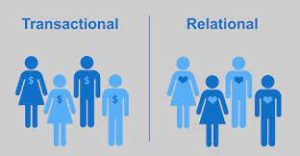 Remember the intake form you were asked to complete at a new doctor’s office? Questions like Do you smoke? How often do you exercise? Transactional queries that gather data but inspire no self-reflection; queries asked of everyone, regardless of needs; indifferent questions devoid of care or concern. Mechanical. Transactional.
But imagine if the first question was:
We are committed to serving you to facilitate you in reaching your optimal health. What would you need to see from us to make sure we provide the type of care you deserve?
This not only tells you you’re going to be taken care of, but causes you consider your goals. You automatically trust this group; you feel safe and cared for even before you meet the healthcare provider. Collaborative. Inclusive. Relational.
I believe a relational approach enables a collaboration in which WE, together, offer ideas that generate outcomes that work for everyone and inspires loyalty and creativity.
While there are arguments to be made for each, I personally find the relational approach more effective, kinder, ethical, successful and more profitable. For those of you who are considering transitioning to a more people-centric style, I’ve got a few ideas. But let me start with personal examples.
HOME DEPOT SUCKS
I recently had to make several home-improvement purchases. Home Depot and Lowe’s are my local choices. Having had negative experiences with Home Depot before, I decided to call them first to see if they might have changed. My first interaction was with the blasted answering ‘voice’ that kept offering me options they wanted me to choose from but I didn’t want. I ended up screaming at ‘him’ as he wasn’t hearing what I needed (Surely, if you’re going to have a machine pick up the phone make it easy for me!). I finally hung up, called back and said ‘Screen Door’ on the 4th question although ‘he’ kept trying to get a more specific response (I didn’t have one! That’s why I was calling!). Finally the machine said they’d connect me. I was kept on hold for 10 minutes and finally hung up. I had wasted 20 minutes, become frustrated, and never got what I wanted. I guess they didn’t want my business.
When I called Lowe’s, I got a lovely voice message: “How can I help you today?” When I said I wanted information, it said “Sure. Let me find someone to help you!” A difference already: I felt heard (even by a machine!). When the phone didn’t pick up after just a few unanswered rings I got a message that said, “Sorry for the delay. We’re trying to find someone to help you.” I was connected shortly after that. A woman answered (a real person!): “Hi. This is customer service. I’m Susan. How can I help?” then heard my issues and said, “I’m going to put you through to Amanda. She’s my best person and she’ll take good care of you. Otherwise, call me back. I want to make it work for you.” Ah. When I later told my contractor I’d prefer buying from Lowe’s he said: “I was going to ask you if you minded that I use them! They’re great. I hate Home Depot. They don’t care about people.” I wonder how much business Home Depot loses because of their transactional practices.
Home Depot made me into a transaction, a faceless number whose needs had to fit into their assumptions. Lowe’s’ people-centric structure – even their automatic messaging – treated me with respect. So simple to make a customer feel like they matter.
Let’s look at the differences within companies.
TRANSACTIONAL STRUCTURE
Working with a large global client recently we discovered two teams solving the same complex problem separately. One hired a consultant to fix the problem; the other took team members off an important project. I suspect they’ll end up with different outcomes and costs, not to mention put disparate systems into the corporation that other departments would have to manage. What’s the cost of the duplication? And what’s the cost of the differences in solutions over time? Hard to be successful when the left hand doesn’t know what the right hand is doing.
Here’s another sad story. A friend of mine was on Google’s leadership team. He returned from his vacation to find his entire team (75 people) had been redeployed, and he was put on a wholly different project. He was furious: what happened to all the work he and his team were creating? Why wasn’t he given notice so he could prepare his folks and tie up loose ends of the long-term project they’d been working on? What was he to do with the calls from old team members, angry and confused as to why the group was disbanded? Transactional. The DOing first at all costs. Literally. Oh. And my friend quit. A smart 10-year veteran who created many of the search apps we all use.
Transactional environments are uncompromising: people quickly learn to make no decisions that go outside the lines, then procrastinate when given a deadline due to leadership’s habit of shifting requirements without warning, oblivious to people’s time or workload.
Transactional management too often sees people as disposable ‘things’, merely cogs in a wheel. It leads to
- a decrease in creativity and problem ownership
- inefficiency
- increased cost
- lost business
- reduced creativity
- minimal cooperation, collaboration, or company-wide coherence
- decreased customer loyalty
- decreased employee loyalty.
With cost, revenue, and time as the criteria, people are left out. Motivation is by rewards and punishment; management controls output via numbers. People aren’t invited to share their creativity and ideas as they’re not part of a solution except as operatives. Yet these same people are responsible for carrying the burden of the errors made by leadership. Customers end up fighting for services that prove unsuccessful or incomplete; service reps are not available when customers need help; customers end up leaving and buying from the relational competitors. There’s no win here.
Thirty years ago I was doing Buying Facilitation® training at Bethlehem Steel. And I know that was a long time ago and Beth Steel is out of business, but this story is worth telling.
There was obviously something wrong: the participants were tired, complaining, inattentive. I stopped the class to find out what was going on. Seems they’d been given two months to move house and family, two months to sell their homes and buy new ones (no Zillow or Google then to do research), get their kids enrolled in new schools, arrange for pets, pack up their lives, and move. With so little time, the Reps moved on their own. They bought houses with no family approval; they traveled back and forth for months to help get their houses sold, pack up and move, see their families. They were angry: lots of sick time, breakdowns, lateness. Few quotas were met. One man actually became physiologically blind. Four months in and many still lived on their own or had left behind teenagers with neighbors to complete their school year.
I finally told my client he had to meet with the team, listen to their needs and anger, and apologize. My client at first resisted: “But I gave them $5,000 to move! What’s their problem!?” Note: he finally apologized and they all – grown men (mostly) – cried together. They needed to hear that someone cared. But it cost Beth Steel time, money, and attrition as long-standing members quit. Not to mention months of unhappiness, upended lives, and reduced profits.
RELATIONAL STRUCTURE
When I was hired to train Buying Facilitation® throughout the global California Closets franchises, I spent my first day sitting in prospects’ closets with different designers. I returned to find my client leaning against the wall waiting for me as I exited the elevator. “How can one little woman cause so much disruption in 5 hours? (Note: I merely asked designers: “How will your prospects choose you over the competition?” and otherwise remained a silent observer.) Let’s go figure this out.” We went into the training room where five members of the leadership team and I posed questions, played with ideas, and eventually came up with some solutions that would potentially diminish the disruption of bringing in a wholly different sales model.
Ultimately the franchises adopted my material and changed their routines. One of our new ideas was to publish an in-house ‘zine as a vehicle to create a franchise-wide WE Space to share new ideas and success stories as the new facilitation model was introduced. It went a long way toward global adoption. Disruption was just a hitch to be managed and used as a reason to create new processes. And their profits rose by 26% annually.
Relational management has different objectives and skill sets. With a focus on people it employs a collaborative approach; ideas get generated from representative groups; all outputs are considered from the human angle and take into account needs, feelings, egos, work-life balance, opportunity. The output represents
- happy employees and customers;
- more sales;
- more efficiency;
- more creativity;
- more trust;
- greater shared understanding/clear communication
- more loyalty,
- easier implementations
- more ownership.
Relational management fosters care and respect for both employees and customers. Goals are met efficiently, with less time wastage, fewer resources, less fall out. When I hear doubters say relational leadership ‘takes more time’ I get curious: with all voices included in planning and decision-making, there are fewer problems, quicker resolutions, less attrition, easy buy-in, more creativity and more accurate data from which to make decisions. Seems to me it ultimately saves time. And makes more money.
DIFFERENCES ON A DAILY BASIS
Transactional businesses believe the DOing is of higher value than the BEing without fully understanding the broad implications of what happens when people become numbers.
When working with a transactional company as a consultant, I’ve been left out of important meetings with critical ramifications; had agendas and dates and team members shifted without discussion causing delays and redos; necessary suggestions get overlooked even when the fallout effects their bottom line. Jobs always take longer as everyone must shift gears due to sudden (unreasonable) changes, or to get everyone on the same page. My frustration and stress level is almost as high as the folks I work with as we all deal with the fallout from seemingly erratic decisions. Time, care and suggestions go unnoticed. And I often end up having to deal with getting paid – checks are late, for the wrong amount, await signatures of people on holiday.
The relational companies I’ve worked with take their commitment to people seriously. There are opportunities for learning and taking on greater responsibility; more flexible work hours to account for childcare or eldercare; excitement over new ideas, regardless of the job description of the people who offer them; respect for customers is shown through the entire customer lifecycle, from voice messages to quick problem resolution. As a consultant my time is respected and my ideas appreciated; I get included in decision making and problem resolution. They even pay me on time and with exuberant appreciation. And several have given me ‘Thank You’ gifts! Working with a relational company brings out the very best of me.
It’s obvious that relational management is far superior. I have some thoughts on how to bring transactional companies into the 21st century.
A STAGED APPROACH TO CREATE A RELATIONAL ENVIRONMENT
Let’s say the leadership team, or maybe one group within the organization, seeks to become relational. What’s a good way to go about it to avoid resistance and manage any disruption?
Changing from transactional to relational is an enormous undertaking:
- the identity and beliefs of the entire company or group must shift from power/force/control/action to collaboration/compassion/trust/respect;
- management must change from top-down control, reward and punishment (win/lose), to mutual decision making, collaboration, and inclusion (win/win);
- client outreach must shift from treating them as numbers to servant leadership (from Home Depot to Lowe’s);
- hiring choices go from results-oriented folks to those seeking to serve.
Obviously it’s not possible to change thinking and leadership styles immediately, but it can be done in stages.
The biggest issue is how to get buy-in for the disruption that will ensue. To encourage ownership, loyalty, idea creation and problem solving, start with a core team – representing all levels of responsibility and job titles – to identify areas of disruption, brainstorm possible goals and resource requirements, and address issues the prevailing transactional process has caused. In other words, this initial group will recognize the problems to be solved, generate ideas for consideration, and begin to lay out possible routes forward for the larger group. And no, the usual leadership team cannot do it as they are the purveyors of the problem.
Here are some ideas to get you started:
- Build a representative team: It’s vital to assemble a core team that represents all levels of responsibility for each business sector – i.e. sales, finance, marketing, tech, etc. If it’s a large organization, start with a representational group for each sector, then eventually create a core team that represents the full company. Make sure to include front-line workers. These folks carry the direct knowledge of the customer and the folks who carry the corporate identity daily.
- Set the parameters: Decide on rules: how the meeting will be led, who is responsible for what, frequency of meetings, etc. Consider rotating leadership.
- Define problem to be solved: Including, but not limited to brainstorming new ideas and gathering data to capture people’s experiences and challenges. Make sure every voice gets heard and included. Check if additional people are needed.
- Manage disruption: Determine the types of disruption most likely to occur: in what areas, what management levels, and potentially how it would show up. potential differences in employee rules and customer outputs; and sales models and customer contact. Start with a very specific set of agreed-upon steps and stages and brainstorm ideas to manage the disruption and encourage buy-in.
- Research: Prior to the next meeting, do research on different types of relational approaches to discuss.
- Formulate approach: Using ideas from the research, cobble together ideas and vote to choose the favorites. Take back to your colleagues to discuss. Take this feedback to the next group meeting.
- Feedback and approach formulation: Consider feedback from constituents and incorporate feedback into a new approach. Begin to choose action items to formulate approach and assign tasks.
These steps will create a representational, dedicated team to take responsibility for beginning a change initiative. I suggest you follow my 13 Steps of Change process that encourages ideas and commitment from all; provides the foundation for buy-in and continuous improvement; and avoids resistance. I’d be happy to discuss this with any groups seeking to change
__________________________
Sharon-Drew Morgen is a breakthrough innovator and original thinker, having developed new paradigms in sales (inventor Buying Facilitation®, listening/communication (What? Did you really say what I think I heard?), change management (The How of Change™), coaching, and leadership. She is the author of several books, including her new book HOW? Generating new neural circuits for learning, behavior change and decision making, the NYTimes Business Bestseller Selling with Integrity and Dirty Little Secrets: why buyers can’t buy and sellers can’t sell). Sharon-Drew coaches and consults with companies seeking out of the box remedies for congruent, servant-leader-based change in leadership, healthcare, and sales. Her award-winning blog carries original articles with new thinking, weekly. www.sharon-drew.com She can be reached at sharondrew@sharondrewmorgen.com.
Sharon Drew Morgen February 17th, 2025
Posted In: News
Are Helpers Really Helping? Why clients resist us, by Sharon-Drew Morgen
 If you are a therapist or coach, manager or consultant, you’ve been schooled to be a guide, a mentor, to help people find solutions they couldn’t find on their own.
During a recent conversation with a coach who prides himself on Always Being Right! (Clients who don’t heed him are told to go elsewhere.) and wondering who would choose him as their coach, I began thinking about how Helpers go about helping, and why clients often ignore their suggestions.
I believe there’s an ‘accepted practice’ problem here: Helping professionals use questions and ‘active listening’ to ‘understand’ the identified problem. But sometimes standard questions and listening practices can’t trigger the best outcomes.
In my work developing systemic brain change models I’ve discovered that behavior change must originate in the brain. The question is how to get there to instigate the change.
In this article, I’ll provide a much-simplified explanation of how brains cause our choices, explain where conventional skills fall short, and introduce you to new skills that can facilitate permanent change without resistance.
BEYOND THE BRAIN
Currently we rely on questions to help us understand a problem and then assume our clients accurately hear what we’re trying to tell them. Unfortunately, this is where the problems begin:
- the way our brains ‘listen’ is biased by our history, regardless of what’s been said. In fact, through no fault of our own, it’s quite possible neither client or Helper hear each other accurately.
- conventional questions themselves are biased by the goals, verbiage, intent, of the Helper and may not uncover accurate data, causing Clients to sometimes offer unhelpful answers.
I’ll begin with the ‘big picture’ and explain how our brains cause us to do what we do.
Simply, our brain is an enormous motherboard that captures and mechanically organizes the data from our lives, stores it in circuits, and uses our mental models and history as the foundation from which to act.
Each of us operates from historic, unconscious, and unique neural configurations, stored as memory in 86 billion brain neurons that hold our history, our ideas, our values and from which our decisions and behaviors arise.
Obviously, we each think and act uniquely. Obviously, no one else has access to our brain circuitry; no one else has our life story or history; no one else can ‘get in there’.
Technically, change occurs when brain components get reconfigured or new ones get formed. Behavior change is a brain issue and part of a system. It’s not a stand-alone process, but the final element of a string of connections triggered by our brain. When we attempt to merely change the final element, there’s no process to maintain it.
HOW BRAINS STORE INFORMATION
I’ve spent decades unpacking how brains are organized and have developed several facilitation models that enable real choice (See How?), models that make it possible for Helpers to enable clients locate the neural circuits that initiated their problem and, by triggering and generating new synapses, reconfigure them.
And herein lie the problem Helpers face now: standard questions and usual listening practices steer the Other to where the Helper, using their own unconscious assumptions and curiosity thinks the answers should be and possibly miss where actual answers reside.
Once I realized this I began researching how brains prompt our actions and eventually, after decades of study and research, developed questioning and listening models that make it possible to get directly into the neural circuits and use brain change as their foundation. I also discarded my role as a Helper and became a Decision Facilitator, to facilitate Others to their own circuits easily develop new behaviors with no resistance.
WHAT IS CHANGE? NO, REALLY?
Change is systemic, not as simple as merely doing something different. Since behaviors are outputs from instructions sent by existing circuits, new behaviors need new neural circuits to send out new instructions for new outputs. Too often, Helpers merely try to change behaviors without changing where in the brain the new instructions will come from.
You see, any change request represents a difference, a threat to the existing system and as such, will cause resistance unless it’s been accepted first. This is the problem with noted change management models – they merely attempt behavior change without generating new neural circuits for the change, or without ensuring the values, beliefs, and mental models of the existing system align with the new and put the system at risk.
It’s like trying to get a backward moving robot to move forward by explaining, questioning, and showing videos; the robot must be reprogrammed. Without taking this into account, by trying to change a behavior by trying to change a behavior without changing the neural circuits, people will resist, or not maintain, the change.
QUESTIONS AND LISTENING
Here are the reasons people have difficulty finding internal answers and making decisions.
Brains: The time it takes to figure out all the criteria needed to make a decision is the time it takes to act on it. No, they’re not dragging their feet; they’re trying to change congruently.
See, the brain’s 86 billion neurons are stored and labeled in ways that may be difficult to consciously access. In fact, words or ideas even enter brains as meaningless sound vibrations (Neuroscience actually calls words ‘puffs of air.’) which ultimately get turned into the signals that then get translated into meaning.
Let me explain the brain stuff that goes on. Hang in with me as it explains why we mishear and misunderstand.
To begin with, our brain doesn’t accept spoken words accurately, as intended. It takes the sound vibrations, turns them into signals, and then finds existing ‘similar enough’ (historic, biased) circuits to translate the signals into meaning – a very inexact process.
To make the process fast (It takes five one hundredths of a second for the entire process.) our brain chooses the quickest route to translation circuits, almost always an oft-used superhighway that may only have a tangential connection to the original meaning and intent. In other words: all incoming words get translated without any regard to accuracy!
Most of us aren’t aware that our thoughts, realizations, understandings, are merely versions of what our brains have already translated for us.
Unfortunately, questions meant to ‘gather data’, are restricted by the Helper’s assumptions. Sometimes Others uncover the exact data we need in order to help them. But sometimes our questions direct the client’s brain to an unhelpful answer, and something more valuable remains unretrieved.
To help Others find precisely where the necessary data is stored, Helpers must have NO assumptions, NO biases, and NO belief that we have anyone’s answers. All we need is to send Others to the right circuits where their answers are stored. And for this, conventional skills don’t work. If you want to better understand exactly what goes on, read my new book How?
Listening: Given we all have a ‘brain circuit translation’ problem making it near impossible for anyone to listen without bias regardless of how well they ‘listen’.
To avoid biases and misinterpretations, to help Others discover where their answers are stored, Helpers must listen differently and don’t assume they ‘understand’ what’s been said. I actually developed a process called Listening for Systems, which bypasses our assumptions and hears what’s intended.
If you’d like to learn more I wrote a book on the subject: What? Did you really say what I think I heard?.
Questions: This one is the most uncomfortable for Helpers. Conventional questions are formulated to elicit data as per the needs, intent, languaging, curiosity of the Asker.
To this end, I spent 10 years inventing a new form of question (Facilitative Question) that foregoes data gathering per se and instead leads Others to the brain circuits and memory channels to precisely where the appropriate data is stored. If you go to my site I explain how I invented them and provide descriptions and articles.
By posing unbiased, systemic questions that lead brains to appropriate circuits, by listening without assumptions, by trusting everyone has their own answers, we can truly serve Others beyond any natural biases we might have.
The new job of Helpers is to begin with the assumption that clients may actually have perfectly good answers stored in some place where their brain isn’t looking.
HELPERS AREN’T HELPING
Unfortunately, these skills are not taught in coaching schools or MBA programs which continue to teach to ‘be aware’, be ‘open minded’, take a ‘different perspective’, do ‘active listening’, ask ‘probing’ questions to ‘give the Helper the information’ they need to ‘help’. But as you now know, neither standard questions or conventional listening will always collect accurate information.
When Helpers try to have answers for Others, our track record is spotty: clients use some of our suggestions and ignore others because they may not have gotten to the core (and unconscious) factors that caused the problem to begin with.
And because our advice ultimately brings Others up against their own inabilities, they push the Helper away regardless of the length or success of the relationship. Inadvertently, because no other way has been developed to professionally help Others, we infantilize our clients.
I know that most coaches, leaders, managers, and Helpers truly want to serve Others. Please consider shifting your goal and learn new tools. I’m happy to help. I’ve developed new skills for Helpers (coaches, sellers, managers, healthcare providers, therapists) to enable folks to discover and create their own answers while reducing the power imbalance and bias, as well as learning tools to teach you how to listen without bias and pose Facilitative Questions. Please contact me in case you’re interested in learning how to do this, and we can all Help as true Servant Leaders. sharondrew@sharondrewmorgen.com
_____________________________

Sharon-Drew Morgen is a breakthrough innovator and original thinker, having developed new paradigms in sales (inventor Buying Facilitation®, listening/communication (What? Did you really say what I think I heard?), change management (The How of Change™), coaching, and leadership. She is the author of several books, including the NYTimes Business Bestseller Selling with Integrity and Dirty Little Secrets: why buyers can’t buy and sellers can’t sell). Sharon-Drew coaches and consults with companies seeking out of the box remedies for congruent, servant-leader-based change in leadership, healthcare, and sales. Her award-winning blog carries original articles with new thinking, weekly. www.sharon-drew.com She can be reached at sharondrew@sharondrewmorgen.com.
Sharon Drew Morgen January 24th, 2025
Posted In: News
What Do Prospects Do Behind-The-Scenes? by Sharon-Drew Morgen
 I realized long ago that the low close numbers in sales were not caused by buyers, sellers, or solutions, but by the sales process itself. With a focus on placing solutions, it enters at the last phase of a buying decision ensuring only those who were going to buy anyway will close.
Without a specific focus on facilitating the private, idiosyncratic, systemic, and confusing change/risk management issues they must resolve before they self-identify as buyers, those folks who are in the process of becoming buyers (and don’t respond to your outreach) get overlooked needlessly. You can easily find and close them by adding starting with change management thinking. Let me explain.
I’ve been in sales one way or another for 45 years, as a seller, coach, inventor, author of 7 sales books (including the NYTimes Business Bestseller Selling with Integrity), trainer and entrepreneur. I continue to be dumbfounded as to why our approach to placing solutions remains one dimensional. Our low close rates should tell us that selling doesn’t cause buying?
WHY DOES SALES OVERLOOK CHANGE MANAGEMENT?
The last – the last – thing people need is information about solutions. They can’t even fully define what they need until they understand the risk to their environment if ‘change’ is introduced.
As a seller turned entrepreneur, when I realized that sales enters with a solution too early, I developed a pre-sales/buying enablement model – Buying Facilitation® – that uses a wholly different goal and toolkit: to first facilitate the change, risk, and buy-in issues folks must manage (and sales overlooks) before they’re ready to buy.
Working together with sales, it’s possible to
- organize the Pre-Sales decision/change management process by helping prospects traverse the 13 steps of decision making/change.
- facilitate the buying process, close 8x more and ¼ faster;
- differentiate yourself from your competitors by first helping folks manage their internal issues;
- use a new qualifying focus on first calls to find high probability buyers.
Note: Dirty Little Secrets lays out the specific behind-the-scenes steps in Pre-Sales and includes an introduction to Buying Facilitation® to help sellers facilitate buying.
I’ve trained many global companies (IBM, KPMG, DuPont, GE, Proctor and Gamble, Kaiser, Morgan Stanley, etc.) with an average 40% close rate from first call. But even folks in the same company (who watch colleagues I’ve trained close 8x more than they’re closing) won’t use it as ‘It’s not sales!’ (No. It’s not.) Leaders familiar with Buying Facilitation® say they’ve got too much invested in maintaining the status quo, and the known 95% failure of sales is built into the system (hiring more sellers, longer close time, lost sales).
SALES IS MISSING A CHANGE MANAGEMENT FRONT END
The sales industry is somewhat aware of the issues that must be resolved on the buy-side, (risk management, change management, buy-in) yet continue basing their sales strategies and solution-placement tools and techniques that don’t facilitate the change management issues folks must first address and prospects really need help with.
Sad but true: in the 40 years I’ve been training sellers, I’ve never met one – not one! – who understands their buyer’s behind-the-scenes decision process, or that they cannot, will not, buy until they’ve resolved their risk of change. Indeed, sellers believe that
- their questions will gather the full set of elements involved in a problem so they can pitch.
- their pitch, or content, will be perceived as the fix for the problem, which most likely hasn’t yet been properly defined.
- their content is offered at the right time, in the right way, to the right group of people, who need their solution NOW and be agreed to by all.
- risk, change, buy-in, can be accomplished with a great solution, solution, or worse, isn’t considered at all.
None of those are true, of course. 80% of a prospect’s decision process has nothing to do with buying anything. In fact, until they’ve gotten buy-in and understand (and agree to) the risk of bringing in something new, they will ignore our efforts: if the risk of change is higher than the risk of staying the same, the status quo prevails regardless of the need or efficacy of the solution.
But with an additional toolkit that helps these folks (they’re not even prospects yet) discover and manage their change and risk issues (prospects must do this with or without us!), sellers can quickly find high probability prospects on the first call and facilitate them through to agreement once the risk is managed. Why not adopt a dedicated tool to first facilitate the Pre-Sales decision process before trying to place solutions?
SELLING DOESN’T CAUSE BUYING
Since Dale Carnegie developed the standard sales model (and regardless of all the new bells and whistles) sales continues to be based on the same premises: seek folks with need, gather information, pitch, follow up and sell. Even new sellers are first taught the features, functions, and benefits of a product when entering a company.
Yet product data is actually the last – the very last – thing people need in order to make a buying decision.
With a change management viewpoint it’s possible that sellers can be seen as true consultants and differentiate from competitors pushing solutions. Not to mention quickly lead folks through their confounding change and buy-in issues – the ones we wait for them to complete! – to enable them to become buyers.
Here is a simplified version what goes on behind-the-scenes:
- A problem is noticed, gets discussed among many, and eventually (not until everyone involved is assembled to have their say) the problem gets defined.
- Workarounds are tried.
- The risk of bringing something new into the status quo is researched and discussed. When it’s accepted as manageable, the ‘need’ is reconsidered to account for the risk.
- If the risk of change is not lower than maintaining the status quo, no change will be made.
- If the risk of change is lower than maintaining the status quo, they agree to consider themselves ‘buyers’ and begin seeking an external solution.
- They ‘go external’ for a solution (i.e. buy something).
- Sales enters, to understand needs and possible solution fit.
It’s possible to find and facilitate would-be prospects through the internal and cultural activities they must undertake on route to becoming buyers and THEN sell. I’m not suggesting you remove the sales model, just use it precisely when then-prospects are ready for it.
So here’s my pitch. Let me train you, your team, your company to begin your sales opportunities by adding Buying Facilitation® to your sales method and:
- Recognize a true prospect on the first call and facilitate them down their steps of change management so they quickly self-identify as buyers. You will then only connect with folks who have a high probability of buying, and stop wasting time on folks who will never close;
- Pose unbiased questions (Facilitative Questions™) that will lead them through to buy-in and decision making quickly
- Need is not the indicator of a prospect. Obviously;
- Garner respect and loyalty. You’ll be serving them and truly making a difference to their decision making;
- Collapse the sales cycle by 75% and close a helluva lot more;
- Be a true servant leader;
- Differentiate from your competitors still pushing solutions;
My Buying Facilitation® training is a new form of training I’ve invented that immerses students in new skills and thinking. It not only will generate more sales, but provides life-long skills in listening without bias, formulating unbiased questions, and following a 13 step decision making process they can use within the team and within their lives.
Should you be at a point where you’re ready to differentiate yourself from your competitors, close more, faster, I would love to speak and use Buying Facilitation® on you to help you ascertain your risk of change and your team’s tolerance to adding new skills. I look forward to speaking. sharondrew@sharondrewmorgen.com
_______________
Sharon-Drew Morgen is a breakthrough innovator and original thinker, having developed new paradigms in sales (inventor Buying Facilitation®, listening/communication (What? Did you really say what I think I heard?), change management (The How of Change™), coaching, and leadership. She is the author of several books, including her new book HOW? Generating new neural circuits for learning, behavior change and decision making, the NYTimes Business Bestseller Selling with Integrity and Dirty Little Secrets: why buyers can’t buy and sellers can’t sell). Sharon-Drew coaches and consults with companies seeking out of the box remedies for congruent, servant-leader-based change in leadership, healthcare, and sales. Her award-winning blog carries original articles with new thinking, weekly. www.sharon-drew.com She can be reached at sharondrew@sharondrewmorgen.com.
Sharon Drew Morgen January 20th, 2025
Posted In: Sales
Change Facilitation™, by Sharon-Drew Morgen
 The CEO of a midsized company recently called me after reading my article on avoiding resistance during a change initiative. He said ‘resistance management’ was built into all their projects due to its prevalence. Curious, I asked him to send me a typical project flow chart. The problem was obvious: ‘people implementation’ was #6.
Resistance management has become standard in change management initiatives. Indeed resistance is so common that hundreds, if not thousands, of books, articles and programs (including a department in Harvard) are dedicated to managing it.
But resistance is only triggered when two necessary elements are overlooked:
People: Too often change management processes are led, designed, and organized by a few ‘leaders’ who tend to overlook some of the folks further down the food chain. It’s necessary to put people #1 to include their voices, unique and vital information, ideas, needs, and early buy-in of everyone who is either part of the problem or who will be part of the solution.
Systems: Any change must include not only behavior changes, but amendments to the underlying system – the rules, beliefs, assumptions, practices, expectations, and norms that have held the status quo in place.
By overlooking people and systems, and with a focus limited to changing behaviors, resistance is a typical output as the cost, the risk, of change is unknown. With a shift in thinking it’s possible to prevent resistance entirely. In this essay I’ll provide thinking on how to accomplish this.
WHAT IS CHANGE?
Theoretically, we’re delighted to change, to realize our best selves, solve a problem, find better solutions and learn new things. But unless the risk of the proposed change is known, understood, and managed; unless the stability, beliefs and norms of the system are maintained, the system will resist change.
Change is an alteration to a system (defined as a set of beliefs and rules that are agreed to by people (or things) included) and entails modifying an existing structure that has been working well-enough for some time, accepted by all, and habituated into the daily norms.
Current change management models focus on changing the problematic behaviors/activity but ignore addressing the norms and beliefs that have created and maintain the system. Without simultaneously managing or shifting the hidden systems issues that have been keeping the defined problem in place, the system faces an unknown risk and will resist.
Before agreeing to change, the system must know:
- How will the new match the existing beliefs, values, norms, rules, routines? Are they compatible? Are the core beliefs/values of the group maintained?
- How will daily tasks and working/reporting relationships change?
- How are individual ego beliefs and job identity factors managed? Are the folks most affected by the new included in information gathering and goal setting at the beginning so they have input around their own (new) jobs? Do these folks get a voice in generating the goals and outputs for a new solution? In sharing their unique experiences to best understand the problem from the customer side?
- What must be relearned and in what time frame?
- What if the new doesn’t represent the output needed by those most affected?
Without answers to questions like these, change becomes a threat and folks will resist doing anything different. Below I discuss a route to determining risk and generating buy-in.
THE STEPS OF CHANGE
There are actually 13 steps that all change takes, most of which occur before a problem can be accurately diagnosed or the goal defined. By enlisting these in your change management processes, you’ll have a good chance to avoid resistance.
Note: While seemingly a book on helping buyers buy, Dirty Little Secrets is about the 13 steps of change/decision making.
Here are the main categories involved:
1. Where are you? What’s missing?
The full problem set can be understood only when everyone who touches the existing problem and will be involved with the new solution are assembled to share their thoughts. How did the problem occur? How has it been maintained over time? What systems, rules, relationships, job descriptions are maintained per the existing circumstances? How would they change as a result of doing things differently? What might the fallout be?
Without knowing this, it’s impossible to get an accurate understanding of the full data set involved or set an precise goal. When leaders and senior managers propose goals for a project without including input from these folks or without recognizing the possible risks the change might trigger, it’s a certainty that time delays, inadequate results, lack of buy-in and resistance are sure to follow.
Too often leadership develops a change project without appropriate input, working only from their unique perspective. Unfortunately, I hear the same thing repeatedly: “Leadership knows the full problem set. They don’t need to call in front-line workers. They’re smart enough to figure it out for themselves.” This assumption is responsible for a cascading array of follow-on problems.
2. How can the system fix the problem with available resources?
Change doesn’t happen unless the system itself recognizes an incongruence. And unless available resources are disqualified, anything new will be questioned. The questions to be answered are:
-
-
-
- What has prevented this problem from being resolved already?
- What is keeping this problem in place? (rules, jobs, outputs)
- Is there anything we already have that might solve our problem if used differently? Any known consultants? Apps?
-
-
3. Brainstorming
Brainstorming is a great way to discover everything and include everyone. For large companies it’s possible to assign representative work teams that bring back the ideas to a main (and representative!) team. Note: it’s vital that everyone’s ideas get included as each job role will have different needs and ideas. Generally, leaders don’t have day-to-day contact with customers and cannot know the full set of issues that must be included in any change initiative.
Brainstorming should include:
-
-
-
- The foundational beliefs/values to work from
- Random ideas for solutions from each department/working group
- Managing the elements holding the old in place and what would change if it’s altered
- What are the risks to making a change? To not making a change? Is the risk of change more/less than maintaining the status quo?
- Possible solutions (to include workarounds)
- The risks of each
- The danger signs that indicate upcoming problems
-
-
4. Managing risk
The risk of change must be equal to or lower than the risk of status quo.
Change can’t proceed successfully unless the risk of change is understood and approved by all. During brainstorming, it’s vital that possible risks get discussed, and the signs of possible failure be understood and managed beforehand.
There are several types of risks involved in change projects:
-
-
- When folks are left out, there’s incomplete data to work from and goal-setting might be flawed and folks who touch customers might not buy-in. Obviously this is a risk to the company, the customers, and revenue.
- The risks each group face from a change must be understood and accounted for before the project goals are set.
- When the core beliefs and values of the company or team are omitted from the identified outcome, people will resist and feel at risk.
-
It’s only when
a. everyone who is involved with the problem and will touch the solution,
b. the core beliefs and values are agreed-upon by all involved at the start as the foundation of the change,
c. the risks are understood and steps are in place to manage them,
d. the Group chooses the specific goals to be met and what specifically an outcome must include
that it’s possible to avoid resistance.
I suggest it’s possible to manage change in a way that encourages buy-in and avoids resistance, garners the full data set with which to set goals and expectations, conclude with a new behavior/belief outcome that can be maintained through time.
PUTTING IT ALL TOGETHER
Change is a multi-faceted endeavor that needs to include both behavior, belief, and systems changes:
-
-
- To lead folks think to think and act differently takes belief change and buy-in.
- To clarify the intent of a change requires unbiased questions (I’ve invented a wholly new form of question called Facilitative Questions™ that avoids bias entirely).
- To engage people to feel safe enough to act in new ways takes inclusion and being heard.
- To collaborate, organize, build new teams, set goals, and manage takes new leadership skills that involve ‘soft’ skills.
- To align stakeholders and design solutions takes collaboration.
-
While many models claim to do the above, our current tools don’t teach how to accomplish it. My book HOW? not only lays out the steps but teaches Faciltative Questions that facilitate core decision making with no bias; a new form of listening that hears accurately; and the full compliment of the steps of change.
As a good starting point, I suggest the following be the core framework:
Our goal is to have/do _______ to alleviate/fix _______ and will include ______ group/departments to help us define the problem and generate a solution design. We understand that any change must include these underlying beliefs, norms, and rules: ________. We understand that the risks of not including these are _______; the danger signs we’ll experience if we’ve left anything important out include _______ that we will address by _______.
If you would like to develop a change management process for your team, or get help with an initiative triggering resistance, call me to discuss: sharondrew@sharondrewmorgen.com
___________
Sharon-Drew Morgen is a breakthrough innovator and original thinker, having developed new paradigms in sales (inventor Buying Facilitation®, listening/communication (What? Did you really say what I think I heard?), change management (The How of Change™), coaching, and leadership. She is the author of several books, including her new book HOW? Generating new neural circuits for learning, behavior change and decision making, the NYTimes Business Bestseller Selling with Integrity and Dirty Little Secrets: why buyers can’t buy and sellers can’t sell). Sharon-Drew coaches and consults with companies seeking out of the box remedies for congruent, servant-leader-based change in leadership, healthcare, and sales. Her award-winning blog carries original articles with new thinking, weekly. www.sharon-drew.com She can be reached at sharondrew@sharondrewmorgen.com.
Sharon Drew Morgen January 13th, 2025
Posted In: News
Why Women Make Great Leaders, by Sharon-Drew Morgen
 When my son George was born in 1972 I was determined to give him attributes I found compelling: kindness, respect and an awareness of others, creativity, a willingness to listen and to collaborate. To accomplish this, I kept TV out of the house, gave him creative toys like blocks, Legos, and art supplies like paints and pipe cleaners. I brought him to theater and galleries as was age appropriate. I began teaching him colors at the Picasso exhibit at the Brooklyn Museum when he was 18 months old and in a backpack. I began a storytelling routine so I could instill in him the skills to listen. Yup. I was raising a creative, kind leader.
By the time he was 2, George was making guns with his pipe cleaners, drawing pictures of rocket ships and army tanks. Where did he gain an affinity to guns? How did he know about army tanks? No idea. But it wasn’t from me.
Eventually he turned into a professional jock (Ok. I’m proud. He’s a silver-medal Olympian.) and a game hunter (Not so proud.). But he’s not creative, certainly listens with very biased and judgmental ears, and only kind under a gruff exterior. How did I not raise the person I tried to raise? Sure, it was ‘nature’. But where did the ‘nurture’ go?
DO MEN WANT THE SKILLS TO CONNECT?
I have come to believe that men and women have vastly different communication skills and assumptions that seem gender specific, so obvious in this story: Friends recently did construction on their house. When they showed me around, one of the new rooms had 5 comfy leather chairs lined up side by side facing a huge TV screen. It was obviously a Man Cave. I started to laugh.
Peter: What’s so funny?
SD: This is obviously your man cave.
Peter: Why is it so obvious?
SD: Women would never line chairs up like that. They’d be in a semi-circle.
Peter: Why would you do that?
SD: So we could engage with each other, communicate, see and hear each other.
Peter: But why would I want to do that?
Right. Why.
THE REPRESENTATION OF WOMEN IN LEADERSHIP
I was the second woman on a public Board of Directors in the UK in 1986. I quickly learned to keep quiet during our Board meetings: men would over-talk me when I spoke; seize and spout my ideas to broad approval with no attribution; fail to invite me to meetings even though my group was bringing in 142% of the net profit of the company. I was once so furious tears of rage seeped out of one eye. “Awwww. Let’s give Sharon-Drew a moment to compose herself,” said the Chairman. “I have no need to compose myself. I’m just enraged at all of you.” Funny, but the next meeting one of the other Board members cried. As women have done for centuries, I had given them permission.
Times have changed a bit. But why, why, has it been such a struggle? And why, why are women in leadership still uncommon? 25% of leadership positions go to women, even though 60% of the workforce are women; 5% of women’s start-ups get funding; 20% of companies have at least one woman on their Board, and there are 53 women CEOs – 9% – in the Fortune 500.
There are lots of reasons offered as to why the numbers are so low: women have babies and aren’t represented in the workplace; women aren’t accepted into the Boys Club and don’t have the mentors to provide them a leg-up; men don’t respect women and won’t listen to them; women don’t play by the rules. Obviously these are all silly. And yet.
Much has been written about the differences between men’s and women’s leadership styles. And yes, it’s been proven that working for a woman leader offers more success – staff are happier, there’s less turnover, more profit is generated, teams work better with a more creative output. For sure more women are being hired in leadership roles. But it’s not enough and it’s not representational.
Given that we make up 51% of the population, women are misrepresented, leaving their experience, ideas, people-orientation and leadership capabilities outside of standard practice.
Instead business employs timeworn bastions of testosterone-laden traditions that put technology, rules, time, and money where relationships, kindness, service, people, and collaboration should be.
And it’s costing us via increased stress levels, dysfunctional teams, lost and disloyal clients, incomplete roll-outs, and far, far too much hubris.
WOMEN HAVE GREAT SKILLS
With so many excuses as to why women aren’t promoted to leadership positions, maybe it’s time to explain precisely why women make great leaders.
- We care. That’s right. We not only care about the bottom line, our place in the market, our regard among competitors. We care about people – staff, teams, creativity, well-being. In my company I gave staff one week and $2,000 a year (in the mid-1980s) to take some type of program that wasn’t work-related to boost their creativity and expand their thinking. They had to take one day off a month to do volunteer work in the community. They weren’t given vacation days but told to take off whatever time they needed to maintain their creativity and clarity, so long as they covered the work. But they were having so much fun at work I literally had to push them out the door to take time off.
- We listen. Women not only listen for details, but we closely attend to differences in speaking patterns so we can ascertain shifts, problems, feelings. Our listening enables us to bond with another’s humanity, not for what they’re doing but who they’re being.
- We’re curious. When women notice a problem, we get curious. Instead of going straight into action, we wonder about its origination, how to fix it from inside, how to assemble the right people to design a fix. And then we trial different approaches, get team agreement for different outcomes.
- We’re problem solvers. And not in conventional ways, but often out-of-the-box thinking.
- We’re risk takers. This is a well-known fact. Women have less fear of failure then men, with a greater understanding of possibilities. Since we’ve had to go-it alone, we’re willing to offend the status quo.
- We communicate. We inspire discussions, ask questions, pose hypotheticals. We start conversations where there is too much silence. We don’t do denial.
- We collaborate. Working in groups is natural. If you’ve ever done an exercise where everyone in the room is given 6 pipe cleaners and told to make a ‘reporting’ structure, all the men attach each to the ones above and below. Women make a daisy chain, in a circle. It’s endemic.
- We work to the future. Instead of taking steps sequentially with a perfect forward-moving plan, we think in systems, in circles. We see the aggregate and try different actions to cause change as a whole.
I will never understand the full set of reasons given why women are kept out of leadership positions. But I do know that by leaving us out, our companies suffer, lose market share and profit and have diminished creativity and kindness.
It seems that in today’s workplace, change is afoot. I look forward to there being an equal number of men and women leaders someday. And just maybe we can all raise our sons in an environment where kindness doesn’t have to be hidden, and equality and respect is the norm.
______________________
Sharon-Drew Morgen is a breakthrough innovator and original thinker, having developed new paradigms in sales (inventor Buying Facilitation®, listening/communication (What? Did you really say what I think I heard?), change management (The How of Change™), coaching, and leadership. She is the author of several books, including her new book HOW? Generating new neural circuits for learning, behavior change and decision making, the NYTimes Business Bestseller Selling with Integrity and Dirty Little Secrets: why buyers can’t buy and sellers can’t sell). Sharon-Drew coaches and consults with companies seeking out of the box remedies for congruent, servant-leader-based change in leadership, healthcare, and sales. Her award-winning blog carries original articles with new thinking, weekly. www.sharon-drew.com She can be reached at sharondrew@sharondrewmorgen.com.
Sharon Drew Morgen November 11th, 2024
Posted In: News
Why We Misunderstand Each Other: brains don’t listen very well, by Sharon-Drew Morgen
 We all know the importance of listening, of connecting with others by deeply hearing them share thoughts, ideas, and feelings that enable us to be present and authentic. We work hard at listening without judgment, carefully, with our full attention. But are we hearing others without bias? I contend we’re not.
WHAT IS LISTENING?
From the work I’ve done tracking how words and sound enter brains, I believe that listening is far more than hearing words and understanding another’s shared thoughts and feelings. Listening is actually a brain thing that has little do to with meaning. It’s about puffs of air.
Indeed, there are several problems with us accurately hearing what someone says, regardless of our intent to show up as empathetic listeners. Generally speaking, our brains determine what we hear. And they weren’t designed to be objective. There are two primary reasons:
- Words are meant to transmit meaning, yet they emerge from our mouths smooshed together in a singular gush with no spaces between them. Our brains then have the herculean task of deciphering individual sounds, individual word breaks, unique definitions, to understand their meaning. No one speaks with spaces between words. Otherwise. It. Would. Sound. Like. This. Hearing impaired people face this problem with new cochlear implants: it takes about a year for them to learn to decipher individual words, where one word ends and the next begins.
- When others speak, their words enter our ears as puffs of air – sound vibrations that have no meaning at all. None. We only ‘understand’ or ‘hear what’s been said’ after these vibrations go through several iterations as electrochemical signals, being distorted and deleted along the way before finally being translated into meaning by our existing circuits. And our brain doesn’t tell us what was deleted or distorted, leaving Listeners to incorrectly assume that what they think they heard is what the speaker meant.
What we think we hear is not necessarily what a Speaker intends to share. Here’s my definition of listening that includes the full set of brain factors:
Listening is an automatic, biological, electrochemical, physiological, mechanical process during which spoken words, as meaningless, incoming puffs of air, eventually get translated into meaning via existing neural circuitry.
In other words, there is no direct route between what was said and what’s heard. Hence the reason for arguments, confusion, and all kinds of errors in communication.
HOW BRAINS LISTEN
Like most people, I had thought that if I gave my undivided attention and listened ‘without judgment’, I’d be able to hear what a Speaker intended. But I was wrong.
When writing my book on closing the gap between what’s said and what’s heard, I was quite dismayed when I learned that what a Speaker says and what a Listener hears are often two different things.
It’s not for want of trying. Listeners work hard at empathetic listening. But the way our brains are organized make it difficult to hear others without bias. Here’s what our brains do when someone speaks:
– Words enter our ears as mere vibrations (puffs of air with no meaning),
– get turned into electro-chemical signals (also without meaning) that
– get sent to existing circuits
– previously used for other translations,
– that then discards whatever signals don’t match
– and using what’s left as the basis for translating the new incoming content
– that we mistakenly believe was what the Speaker said.
It’s mechanical. As a result, we not only mishear what was intended, but – because the new content is translated by historic circuits – we unwittingly maintain our biases, not to mention our ability to expand our knowledge base is restricted.
With the best will in the world, with the best empathetic listening, by being as non-judgmental as we know how to be, as careful to show up with undivided attention, we can only hear what Others say according to what our brain allows us to hear.
IT’S POSSIBLE TO GET IT ‘RIGHTER’
We can’t easily change the process itself , but it’spossible to interfere a bit and add new circuits with the brain change models I’ve developed.
I’ve come up with two ways to listen with more accuracy:
- When listening to someone speak, stand up and walk around, or lean far back in a chair. It’s a physiologic fix, offering an Observer/witness viewpoint that goes ‘beyond the brain’ and disconnects from normal brain circuitry. I get permission to do this even while I’m consulting at Board meetings with Fortune 100 companies. When I ask, “Do you mind if I walk around while listening so I can hear more accurately?” I’ve never been told no. They are happy to let me pace, and sometimes even do it themselves once they see me do it. I’m not sure why this works or how. But it does.
- To make sure you take away an accurate message of what’s said say this:
To make sure I understood what you said accurately, I’m going to tell you what I think you said. Can you please tell me what I misunderstood or missed? I don’t mind getting it wrong, but I want to make sure we’re on the same page.
Listening is a fundamental communication tool. It enables us to connect, collaborate, care, and relate with everyone. By going beyond Active Listening, by adding Brain Listening to empathetic listening, we can now make sure what we hear is actually what was intended. To train your team on how to listen without bias, please contact me for a one-day zoom course. sharondrew@sharondrewmorgen.com
______________________________
Sharon-Drew Morgen is a breakthrough innovator and original thinker, having developed new paradigms in sales (inventor Buying Facilitation®, listening/communication (What? Did you really say what I think I heard?), change management (The How of Change™), coaching, and leadership. She is the author of several books, including the NYTimes Business Bestseller Selling with Integrity and Dirty Little Secrets: why buyers can’t buy and sellers can’t sell). Sharon-Drew coaches and consults with companies seeking out of the box remedies for congruent, servant-leader-based change in leadership, healthcare, and sales. Her award-winning blog carries original articles with new thinking, weekly. www.sharondrewmorgen.com She can be reached at sharondrew@sharondrewmorgen.com.
Sharon Drew Morgen November 4th, 2024
Posted In: News